
Budget Planning
Beyond the Estimate: Mastering Your Remodel Budget and Scope Priorities
Liri Builders Team· 3 min read· Published
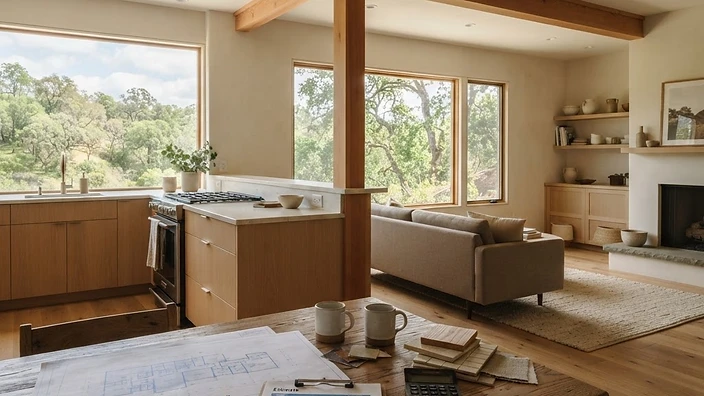
Learn how to build a resilient remodeling budget, manage essential contingencies, and prioritize your project scope for a successful Bay Area renovation.
Embarking on a home renovation in the Bay Area is an exciting endeavor, but the difference between a smooth project and a stressful one often comes down to how you manage your budget and scope before the first hammer swings. Many homeowners focus exclusively on the initial estimate, but a truly successful project requires a strategy that accounts for the realities of our local housing stock and the complexities of design-build construction. To protect your investment, you must treat your budget as a living document that balances your "must-haves" with the inevitable surprises of construction. A practical approach begins by separating your project into clear categories: design and planning, permits, labor, materials, and a dedicated contingency fund. By defining your scope early—distinguishing between essential structural needs and aesthetic preferences—you create a roadmap that allows you to make informed trade-offs if conditions change. For instance, if an inspection reveals aging plumbing or electrical systems, having a pre-planned priority list helps you decide whether to adjust your finish selections or phase the work to keep the project on track. A common pitfall is viewing the contingency fund as "extra" money for upgrades. In reality, this reserve is your insurance policy against the unknown. For older homes, which are common across the Bay Area, a contingency of 15% to 20% is often recommended to cover conditions uncovered during demolition. When comparing proposals, ensure each contractor is bidding on the exact same scope of work. A lower price often reflects missing items like site protection, debris removal, or permit coordination rather than true savings. Transparency is your greatest asset; share your target investment range with your design-build partner early so they can help you align your vision with your financial goals. ## Practical Checklist for Budget and Scope Planning Before you commit to a project, use this checklist to ensure your plan is robust: * Define your project goals: What problem are you solving? Who will use the space? * Separate needs from wants: Rank every feature as essential, preferred, or optional. * Build a comprehensive budget: Include design fees, engineering, permits, labor, materials, and site protection. * Set a realistic contingency: Reserve 10–20% of your total budget for unexpected conditions. * Verify the scope: Ensure every estimate includes the same level of detail, from demolition to final cleanup. * Plan for the "what-ifs": Discuss potential risks with your team, such as site-specific drainage or structural requirements. * Document everything: Avoid verbal agreements; ensure all changes to scope or budget are recorded in writing. Whether you are planning Whole-Home Remodeling or considering Home Additions, a disciplined approach to your budget ensures that your home improvement project remains a rewarding investment. Ready to start your project with a clear plan? Book a Free Consultation at /consultation.
Source note: Sources consulted: Realm Home (realmhome.com) on remodel planning and duplex budgets; Clever Design & Remodeling (cleverdesignandremodeling.com) on renovation preparation; LM Home Renovation Planning Checklist (irp.cdn-website.com); Sofiov (sofiov.com) on contingency funds; UniqHaus (theuniqhaus.com) on 2026 Bay Area budgeting; AIA (aia.org) on managing contingency allowances; Sami & Sons (samiandsons.com) on realistic budgeting; Houzz (houzz.com) on managing budget challenges. Note: The cover image is an AI-generated illustrative concept and does not represent a completed Liri Builders project. Cover image: AI-generated illustrative concept, not a completed Liri Builders project.
Disclaimer
This article is general information, not legal, engineering, architectural, tax, or code advice. Requirements vary by property, jurisdiction, project, and current regulations. Please verify project-specific requirements with the appropriate professionals and your local building department.
Talk through your next steps
Discuss your goals, scope, budget expectations, and timing so we can plan your next steps together.
Book Your Remodeling ConsultationCall 925-471-8088